

When people talk about debt, the discussion almost always revolves around interest rates, good vs bad debt, or leverage. Those are useful distinctions, but they miss the most important point.
Debt is not primarily a financial variable.
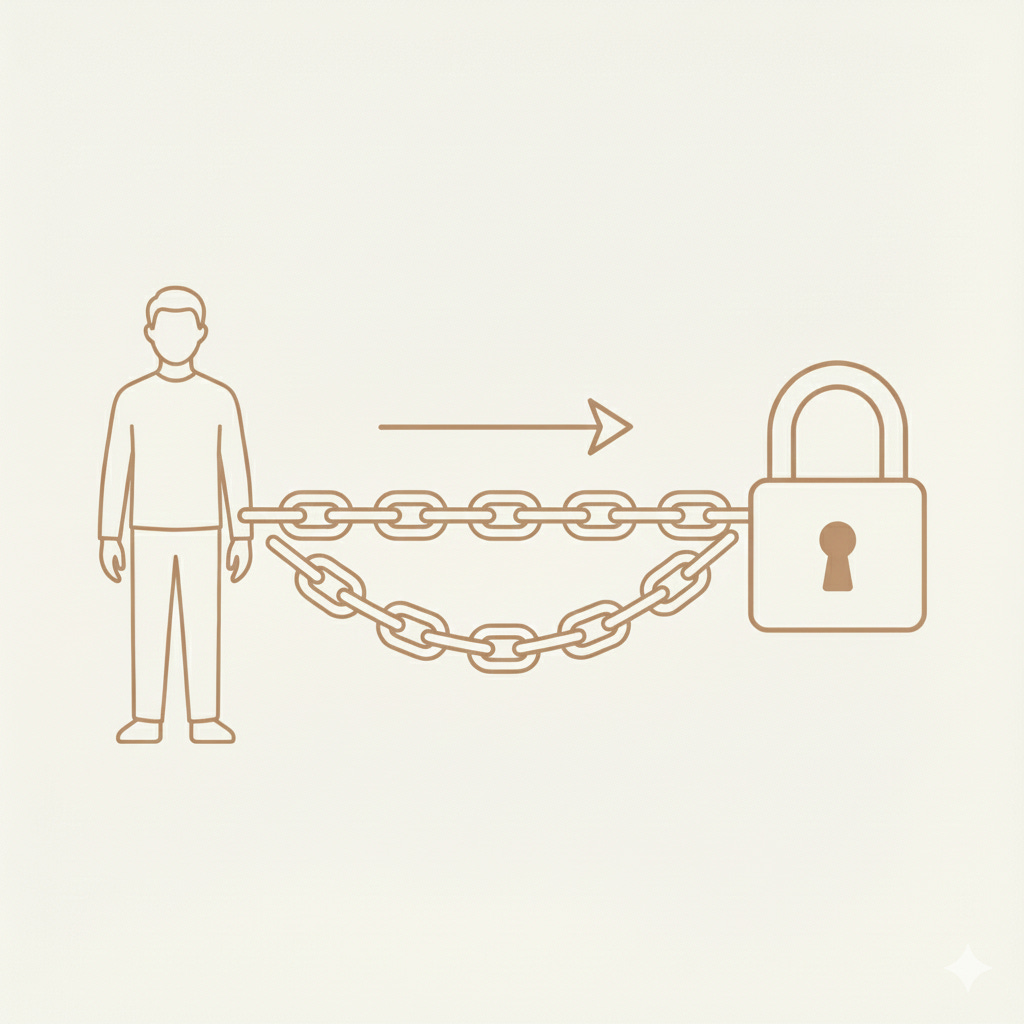
Debt is a constraint on future optionality.
And optionality — not return — is what determines long-term financial resilience.
The Hidden Cost of Debt: Loss of Flexibility
Every form of debt creates a fixed obligation. Regardless of what happens in your life, markets, or career, the payment must be made.
This transforms uncertainty from something you can adapt to into something you must endure.
The real cost of debt is not the interest you pay.
It’s the loss of freedom to respond to change.
Debt Turns Volatility Into Risk
Volatility by itself is not dangerous. Income fluctuations, market drawdowns, temporary setbacks — these are manageable as long as your obligations are flexible.
Debt changes the equation:
Income volatility becomes default risk
Career transitions become dangerous
Market downturns become forced-selling events
Debt doesn’t just increase risk.
It converts uncertainty into fragility.
Why Debt Punishes the Worst Timing
Life events cluster in inconvenient ways:
Job loss often coincides with economic downturns
Health issues tend to reduce income, not increase it
Market crashes happen when liquidity is most valuable
Debt amplifies bad timing because it removes the option to wait.
Without debt, you can delay decisions.
With debt, decisions are made for you.
Debt Is a Bet Against Your Own Flexibility
Taking on debt is implicitly betting that:
Your income will remain stable
Your priorities won’t change
Your health and energy will be consistent
External shocks will be manageable
Sometimes this bet pays off. Often, it doesn’t.
What makes debt dangerous is not pessimism — it’s overconfidence in predictability.
The Asymmetry of Debt
Debt has asymmetric outcomes:
Best case: slightly higher growth or convenience
Worst case: irreversible damage
Upside is capped. Downside is not.
This asymmetry is why debt should be evaluated less like an investment decision and more like a risk-engineering decision.
Optionality Is the Real Asset
Optionality means:
Ability to say no
Ability to change direction
Ability to wait
Ability to absorb shocks
Debt erodes all four.
Wealth without optionality is fragile wealth.
Income without optionality is stressful income.
A Better Question Than “Is This Good Debt?”
Instead of asking:
“Is this good debt or bad debt?”
Ask:
“How much future flexibility am I sacrificing if this goes wrong?”
This single question reframes debt from a spreadsheet decision into a life decision.
Practical Implications
Low debt increases career optionality more than a higher salary
Low fixed obligations reduce behavioral mistakes during crises
Low leverage allows you to play offense when others are forced to defend
Debt doesn’t just shape your balance sheet.
It shapes your behavior under pressure.
Final Thought
Debt is not evil.
But it is binding.
In a world defined by uncertainty, adaptability is the most valuable form of capital you can own.
And debt, by design, trades adaptability for immediacy.
Sometimes that trade is worth it.
But it should never be made lightly — and never evaluated only through interest rates.