

Why you need to stop treating tax season as a surprise and start building a year-round process.
For most people, tax season is an annual emergency. Somewhere between April and June, panic sets in. You spend your weekends digging through emails, logging into half-forgotten broker accounts, and trying to decipher the capital gains reports generated by your trading platforms.
If you are pursuing financial independence, this chaotic approach is a liability.
Wealth building requires organization. When you shift your perspective from viewing taxes as an annual event to managing them as a continuous system, you reduce stress, avoid costly penalties, and ensure you never miss out on deductions or double-taxation recoveries.
Here is how to build a robust, foolproof tax system designed for the European investor.
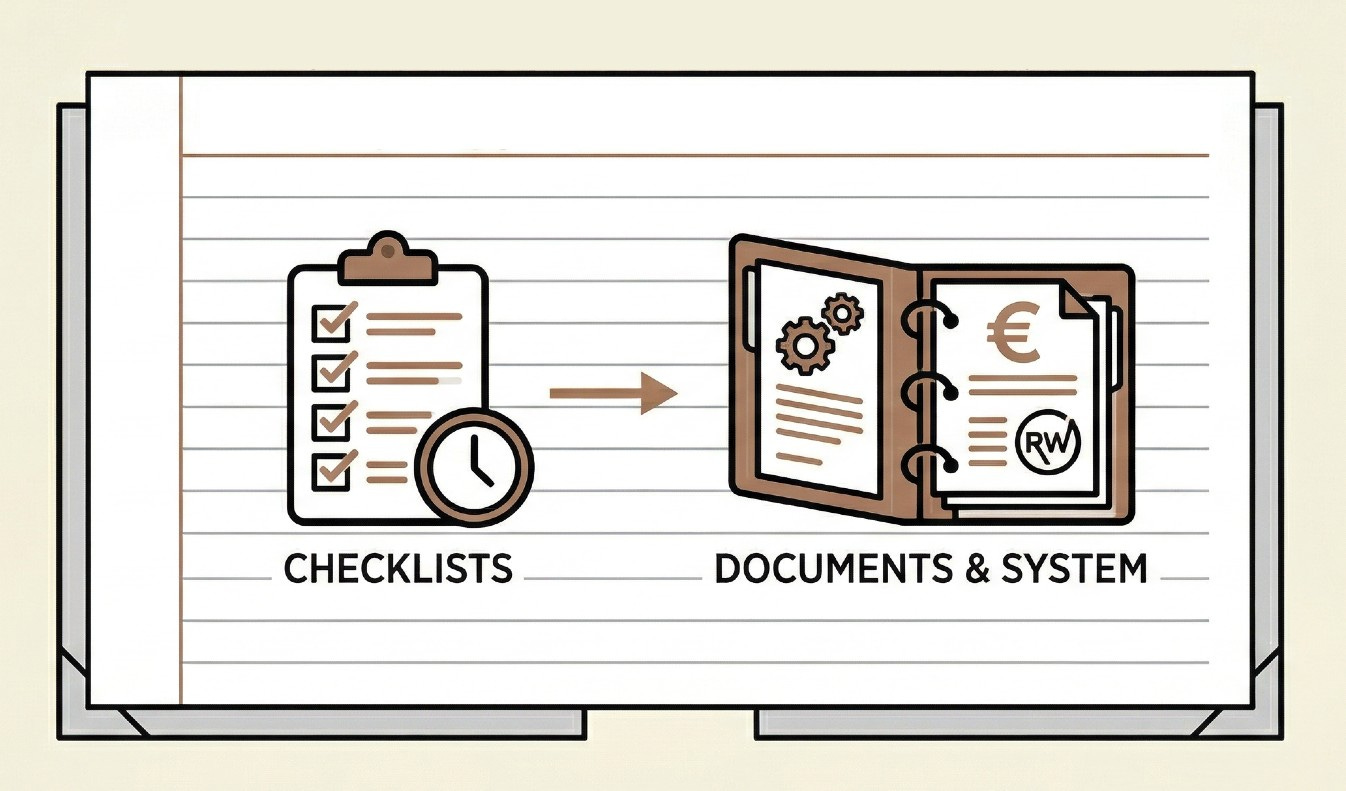
The Mindset Shift: Event vs. System
A system is simply a set of repeatable processes. You don’t need to be an accountant to build one; you just need a digital filing cabinet and a routine.
When you treat taxes as an event, you rely on your memory to piece together a full financial year. When you treat taxes as a system, you rely on a framework that collects, organizes, and stores information automatically as life happens.
The Digital Filing Cabinet
The foundation of your tax system is a simple, clearly labeled digital folder structure (using Google Drive, iCloud, or OneDrive). Create a master folder for the current tax year (e.g., “Taxes_2026”) and break it down into four sub-folders:
Income & Payslips: For your primary salary, freelance invoices, or side-hustle income.
Investment Reports: For end-of-year statements, dividend certificates, and capital gains summaries from your brokers.
Deductible Expenses: For pension contributions, healthcare receipts, or home-office expenses (depending on your local EU jurisdiction).
Official Correspondence: For any letters or notices from your local tax authority (e.g., Agenzia delle Entrate, Finanzamt, HMRC, Agencia Tributaria).
Whenever a relevant document hits your inbox, drag it immediately into the correct folder. Don’t wait.
The European Investor’s Tax Checklist
Europe is a mosaic of different tax jurisdictions, but the fundamental requirements for investors are highly similar across borders. If you invest globally, you need a checklist to ensure you aren’t leaving money on the table or violating reporting laws.
Keep this checklist handy and update it as your portfolio grows:
1. Capital Gains and Losses
If you use a local broker, they often act as a withholding agent (calculating and paying taxes for you). But if you use an international broker (like Interactive Brokers or Degiro), you are likely under a declaratory regime.
[ ] Download the annual tax report from all international brokers.
[ ] Match capital gains against any carried-forward capital losses from previous years to lower your tax burden.
2. Double Taxation and Withholding Taxes
This is where European investors lose the most money. If you hold US, Swiss, or French stocks, you are likely hit with a foreign withholding tax on your dividends.
[ ] Verify that your W-8BEN form (for US stocks) is up to date with your broker to reduce the US withholding tax from 30% to 15%.
[ ] Collect dividend certificates to claim foreign tax credits in your home country, ensuring you don’t pay taxes twice on the same dividend.
3. Wealth and Foreign Asset Reporting
Many European countries require you to declare assets held outside your country of residence, even if you didn’t sell anything.
[ ] List the end-of-year balances (or average balances) of all foreign bank accounts (e.g., Revolut, N26, foreign brokerages).
[ ] Gather the assessed values of any physical real estate you own abroad.
[ ] Ensure compliance with local monitoring frameworks (e.g., the Quadro RW in Italy, Modelo 720 in Spain).
4. Pension and Tax-Advantaged Accounts
Most EU countries offer tax deductions for contributions made to supplementary pension funds or specific accounts (like a PEA in France or an ISA in the UK).
[ ] Download the annual contribution summary from your pension provider.
[ ] Verify the maximum deductible limit in your country and plan your year-end contributions accordingly.
The Monthly Maintenance Routine
A system only works if you maintain it. Instead of dedicating 20 hours to taxes in May, dedicate 15 minutes on the first Sunday of every month.
During this monthly check-in:
Clear your physical and digital inboxes of any financial documents.
Log into your brokers to download any monthly account statements.
Update a simple “Tax Dashboard” spreadsheet tracking your dividend income and realized gains/losses for the year.
Final Thought
You cannot control macroeconomic policies, interest rates, or what your local government decides the capital gains tax rate will be next year. But you can control how efficiently you manage your reporting.
Building a “Taxes-as-a-System” framework transforms a massive headache into a smooth, 15-minute administrative task. It protects your wealth from unnecessary fines, ensures you capture every deduction, and frees up your mental energy to focus on what actually matters: growing your portfolio and enjoying your life.
💡 Free Resource for everyone: Don't want to build this from scratch? I’ve created a Google Sheet that you can duplicate and start using today. Just click File > Make a copy to add it to your own Google Drive!